Wholesale ordering your customers
will actually use
Carrot is the operating system for independent food and beverage distributors: a B2C-grade storefront for your accounts, a back office that runs the whole trading relationship, and a direct line into the ERP you already have.
No card required to see it. We will show you your own catalogue.
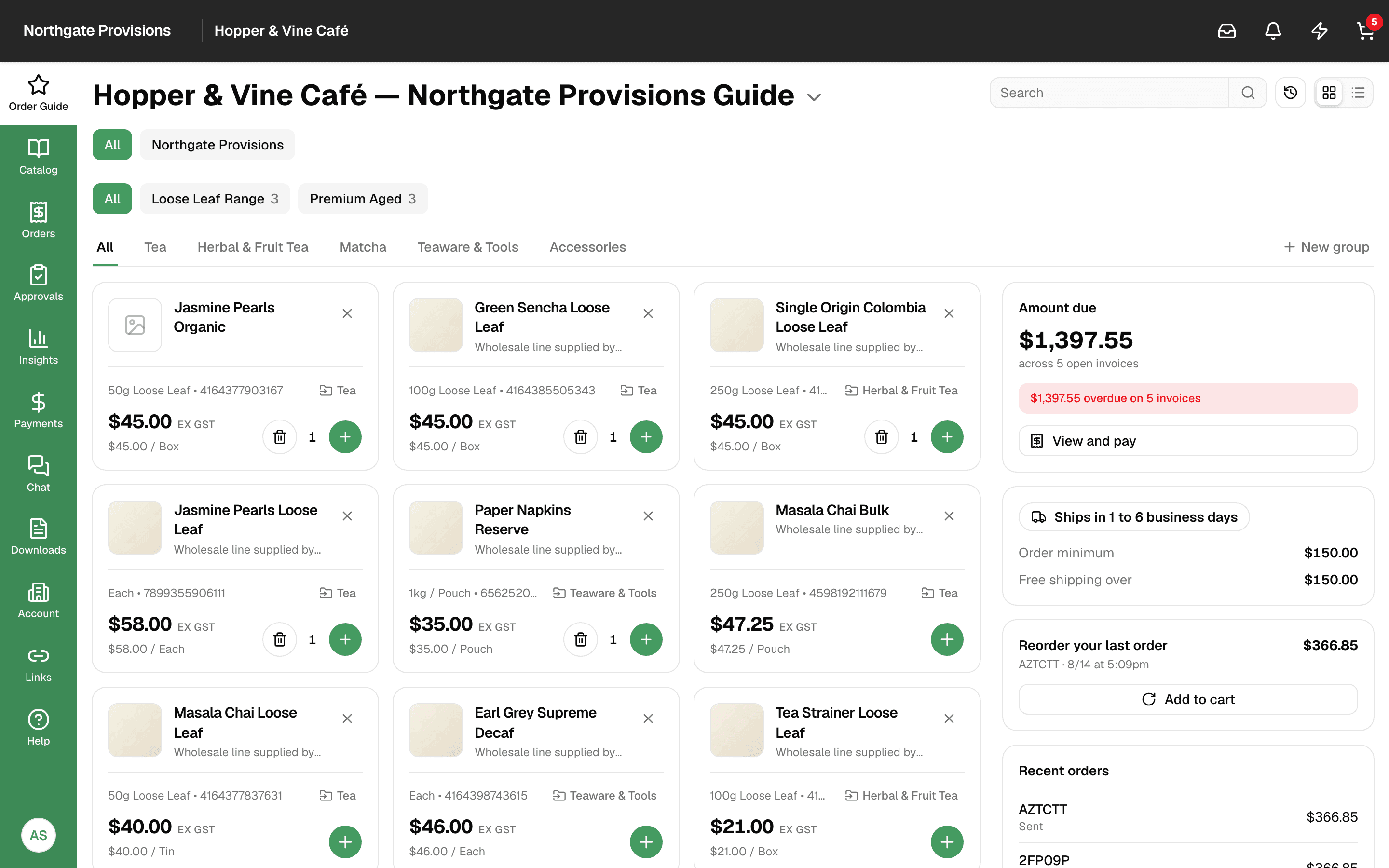
The buyer storefront, shown with a demo distributor’s data. Carrot is white-labelled: in production this is your name and your colours.
The platform
Five parts of the job, one system
Five modules sharing one catalogue, one pricing engine and one customer record. All of it is shipping software, running for distributors today.
For your customers
Storefront
Ordering your customers actually enjoy using
Learn moreFor your team
Back office
The whole trading relationship, in one place
Learn moreFor sales and category
Pricing & promotions
Every customer's real price, resolved automatically
Learn moreFor finance and AR
Payments & finance
Get paid on time, with less chasing
Learn moreFor operations
Delivery & fulfilment
The logistics your customers plan their week around
Learn moreAnd the ERP you already run
6 live integrations, and an honest status against every one of them.
Inside Carrot
See exactly what your customers see
Screens from the running product, shown here with a demo distributor's data. In production every one of them carries your brand, your catalogue and your prices.
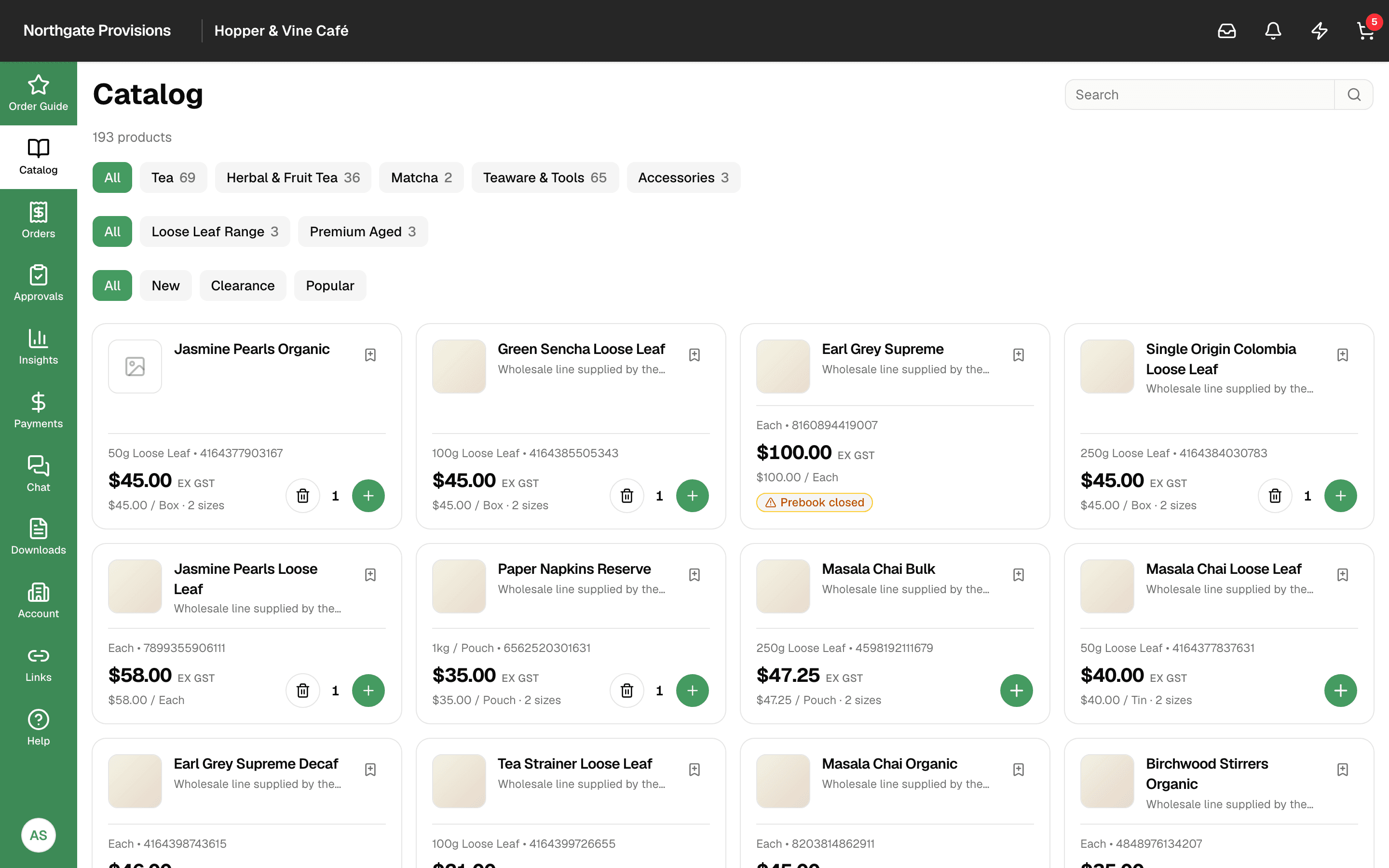
The full catalogue, searchable
Beyond the curated guide, customers browse everything you carry, with categories, filters and search. This is where they find the lines they did not know you stocked.
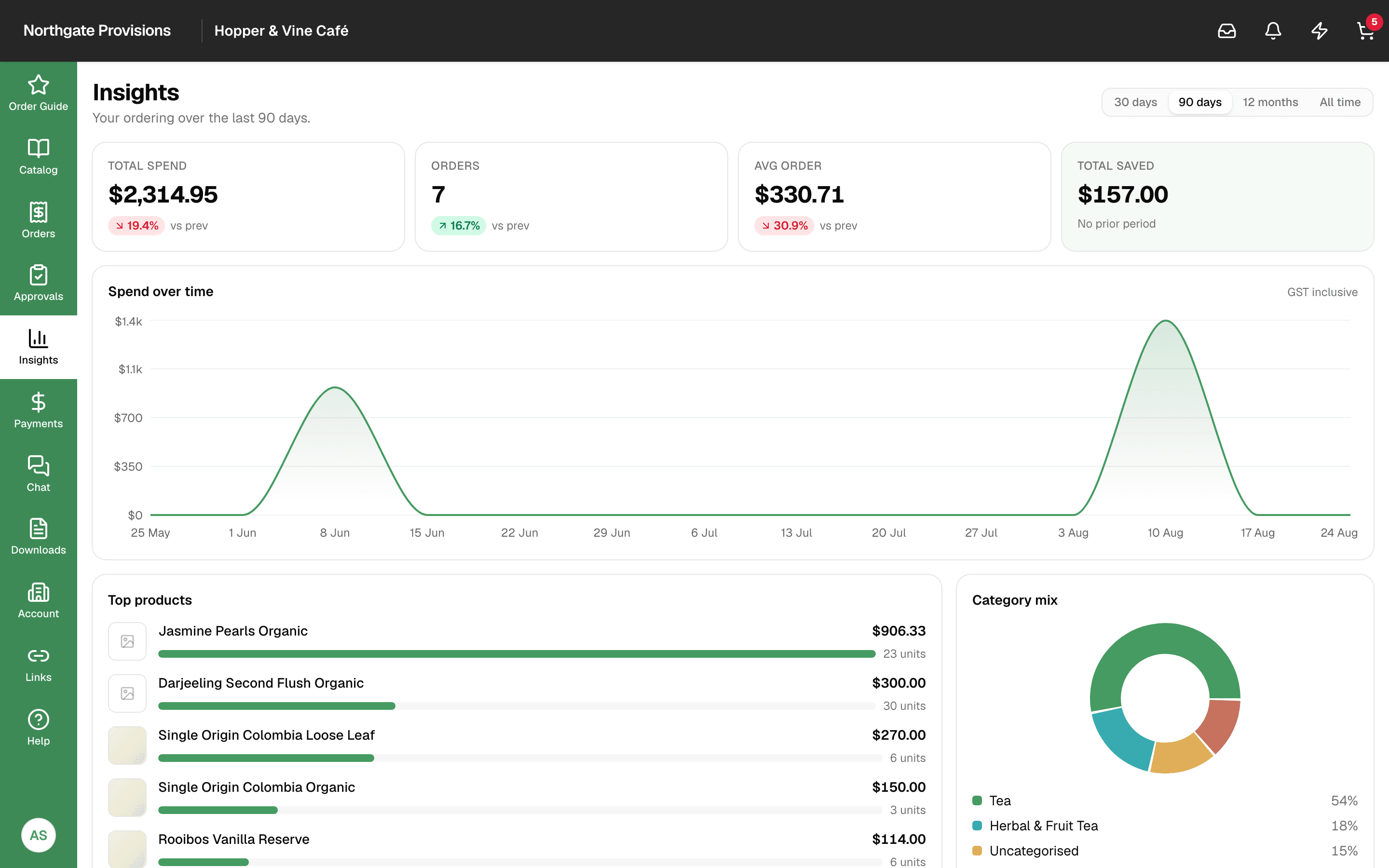
A venue that can see its own numbers
Spend over time, top products and category mix, for the customer's own account. Buyers who understand their spend place larger and more considered orders.
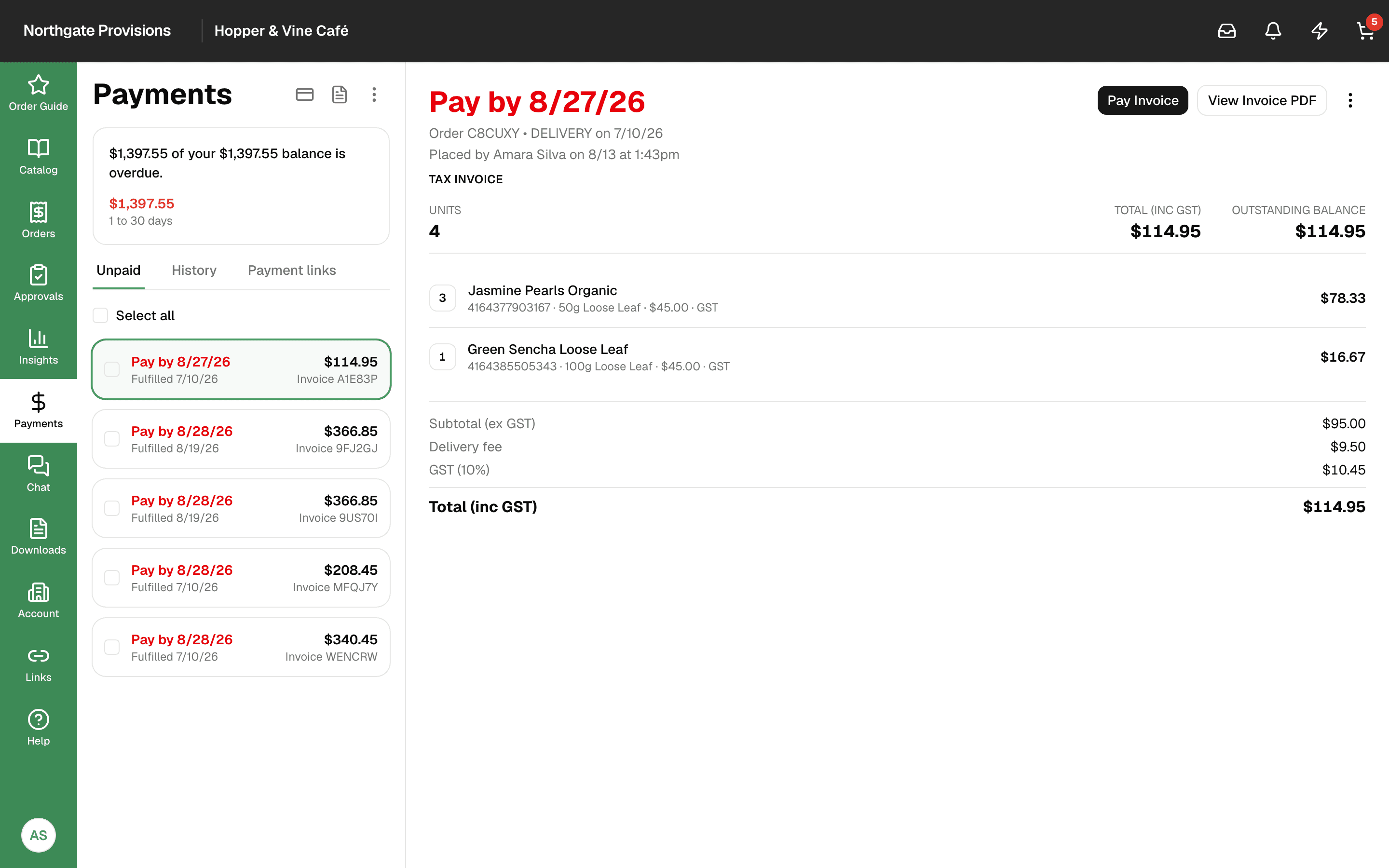
What is owed, and a way to pay it
Outstanding invoices, pay-by dates and overdue state, with card and direct debit built in. Collections stop being an email thread.
Why Carrot
The advantage independents have is service. The software should not undo it.
You already beat the national distributors on knowing your customers. What you lose to them on is the ordering experience, the payment terms and the tooling. That is a solvable problem.
Built for independents, not for the giants
The national distributors bought their way to good software. Carrot exists so a family business with forty accounts can put the same ordering experience in front of a chef, without a six-figure programme and a year of consultants.
Your ERP stays the system of record
Carrot does not ask you to migrate. It reads your items, your customers and your price lists from the ERP you already run, and sends orders back. The books stay where your accountant expects them.
One platform, not five subscriptions
Ordering, pricing, payments, delivery and customer messaging in one place, sharing one catalogue and one pricing engine. Nothing to reconcile between vendors, because there is only one.
Australian by default
GST handled properly, ABN validation on trade applications, compliant tax invoices, and payment methods Australian venues actually use, including PayTo and BECS direct debit.
Getting started
Implementations go wrong for boring, predictable reasons
Almost always the same three: the catalogue was never clean, the pricing rules were only in somebody's head, and the ERP connection was scoped optimistically. We start with all three.
- 1
Connect your data
We pull items, customers and price lists from your ERP, or import them from a file if you would rather start there. You see your own catalogue in Carrot before you commit to anything.
- 2
Agree the pricing rules
Price books, contract rates and quantity breaks get written down, usually for the first time. This is the step that decides whether the rollout goes well.
- 3
Pilot with real accounts
A handful of friendly customers order for real, on their own prices and their own delivery days, while everything else carries on unchanged.
- 4
Roll out at your pace
Move accounts across in groups. Phone and email ordering keeps working the entire time, because turning it off before customers are ready is how these projects fail.
See it running on your own catalogue
Tell us what you distribute and what you run on. We will come back with a walkthrough built around your business, not a generic demo tenant.
- No obligation
- We come to you
- Your data, your ERP